
Case study: AI workflow automation
Accounts receivable automation for QuickBooks billing
Unpaid bills tracked by age, admin fees applied on schedule and supplier records created automatically in QuickBooks.
Overview
A business with agreement-based billing needed help with this: unpaid bills tracked by age, admin fees applied on schedule and supplier records created automatically in QuickBooks.
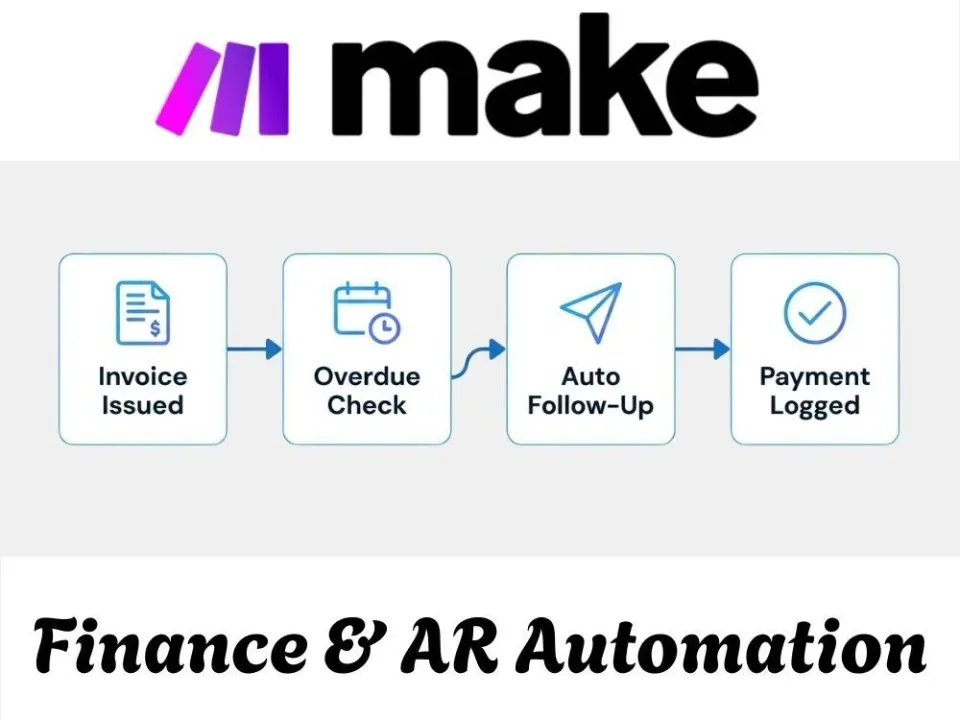
The problem
Billing ran across several agreement types, each with its own fees and payment terms. Unpaid bills were tracked by checking QuickBooks by hand, admin fees were applied manually at each stage, and supplier records had to be created every time a deal reached compliance review.
What we built
We built a set of connected automations between QuickBooks and the CRM that watch for unpaid bills, apply fees at each stage, keep bill amounts aligned with agreement terms and create supplier records automatically. Each automation is described below.
The automations we built
Each automation below handles one part of the workflow. Together they replace the manual steps described above, and each one keeps a record of what it did.
AML Supplier Onboarding Alert
The problem: This automation was built for a sales operations team to eliminate the manual work of preparing supplier records and billing documentation whenever a deal reaches a key compliance stage in the pipeline. Previously, moving a deal into anti-money-laundering (AML) review required someone to manually create supplier profiles, generate a bill, and separately notify the contact, a process prone to delay and inconsistency. The automation now triggers the moment a deal shifts into AML status, automatically builds the supplier and bill records, and notifies the contact by SMS or email depending on the information available.
How it works: The workflow is triggered through a webhook when a deal moves into AML status, then pulls the deal, contact, and owner details before routing based on whether the supplier already exists. Make.com handles the branching logic, checking and either creating or updating the supplier record and corresponding bill in QuickBooks. A second router then determines the contact method: if a phone number is present, Twilio sends an SMS notification with retry logic; otherwise, an email is sent and logged to a connected data store for recordkeeping.
- Eliminated manual supplier and bill creation at every AML stage change
- Reduced delays in notifying contacts during compliance review
- Streamlined accounting record accuracy between Zendesk Sell and QuickBooks
- Added built-in retry safeguards to prevent missed notifications
Automated AR Follow-Up Alerts
The problem: This automation was built for a business managing recurring invoicing that needed a better way to stay on top of unpaid bills without someone manually checking QuickBooks every day. Before this, tracking overdue balances and adjusting bill amounts based on how long they'd gone unpaid was a manual, time-consuming process that made it easy for follow-ups to slip through the cracks. Now the system runs on a recurring schedule, searches QuickBooks for unpaid bills, adjusts amounts based on how long each bill has been outstanding, and automatically reaches out to the client by SMS or email depending on what contact info is available.
How it works: The workflow runs every 15 minutes, searching QuickBooks for unpaid bills and pulling in the relevant billing details. It then routes each bill through a series of checks based on how many days it's been outstanding (30, 60, or 90 days), adjusting the bill amount and updating the corresponding line items in QuickBooks at each stage. Once a bill hits a certain threshold, the flow pulls the contact's info and decides how to follow up: if a phone number is on file, Twilio sends an SMS reminder, and if not, an email goes out instead, with everything logged back to the record.
- Eliminated manual checks for unpaid invoices in QuickBooks
- Sped up client follow-up on aging balances
- Kept billing records accurate and up to date automatically
Multi-Agreement Billing Automation
The problem: This automation was built for a business managing customer billing across multiple agreement types that needed a consistent way to keep bill amounts aligned with actual payment terms. Previously, updating bill amounts to reflect different customer agreements and admin charges meant manually tracking which supplier or account each bill belonged to and adjusting figures by hand, a process that was easy to get wrong as agreement stages changed. Now the system automatically pulls records, checks which agreement type applies, and updates the correct bill amount and admin charge in QuickBooks without anyone needing to step in.
How it works: The workflow runs on a recurring schedule, pulling records from a connected data store and checking them against Zendesk Sell through an iterator that processes each item in sequence. From there, a series of routers sort records based on which agreement type applies and how many days have passed since approval, typically at the 30 or 60 day mark. Depending on the match, QuickBooks searches for the right supplier and updates the bill with the correct charge percentage, whether that's a flat admin fee or a full charge, and logs the update back to the data store for each case.
- Automated bill amount updates across multiple agreement types
- Eliminated manual tracking of admin charges by agreement stage
- Reduced errors in matching bills to the correct supplier
- Kept billing records synced automatically between Zendesk Sell and QuickBooks
AML Fee Automation Sync
The problem: This automation was built for a business handling compliance-related billing that needed a way to consistently apply admin fees at set intervals without relying on someone to manually track and update each bill. Before this, applying the correct fee at the 30, 60, or 90 day mark meant checking each bill by hand and updating both QuickBooks and the CRM separately, leaving room for missed or inconsistent updates. Now the system automatically works through open bills, applies the right fee based on how many days have passed, updates the corresponding line items, and keeps both QuickBooks and Zendesk Sell in sync while logging progress to Google Sheets.
How it works: The workflow starts on a webhook trigger, then checks Google Sheets to confirm whether a report already exists before iterating through the relevant bills. Each bill is routed based on its age, either 30, 60, or 90 days, and QuickBooks is updated with a new bill line and line item reflecting the applied fee. The updated bill amount is then aggregated and passed back through the flow, where Zendesk Sell is updated to reflect the change on the corresponding deal, with retry logic in place in case any step fails along the way.
- Eliminated manual bill updates for compliance related admin fees
- Kept QuickBooks and Zendesk Sell records consistently in sync
- Added retry handling to prevent missed or failed updates
Related
This project is an example of ai workflow automation. If your team has a similar workflow, the pages below explain how we approach it, and the neighbouring case studies show the same ideas in other businesses.